

Melbourne is the coastal capital of the southeastern Australian state of Victoria. The city is centred around the modern Federation Square development, with plazas, bars, and restaurants by the Yarra River. In the Southbank area, the Melbourne Arts Precinct is home to Arts Centre Melbourne, a performing arts complex, and the National Gallery of Victoria, featuring Australian and Indigenous art.
As the capital city of Victoria and Australia’s second-largest city, Greater Melbourne covers an area of approximately 9,992.5 km² with a population of around 5.35 million (as of 2024). Melbourne prides itself on a multicultural heritage, with residents from almost every part of the world. This diversity and rich heritage can be experienced through the city’s sports, artistic, social, and religious life.
Melbourne is one of the most favoured destinations for international students, with an international reputation for the highest standards of education and training. Often called Australia’s cultural capital, Melbourne is home to the attractions that make the Australian lifestyle so appealing.
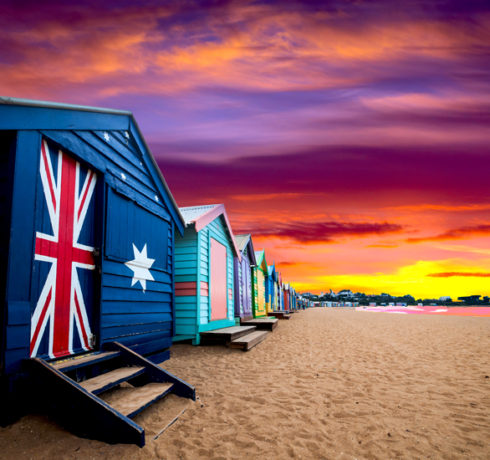
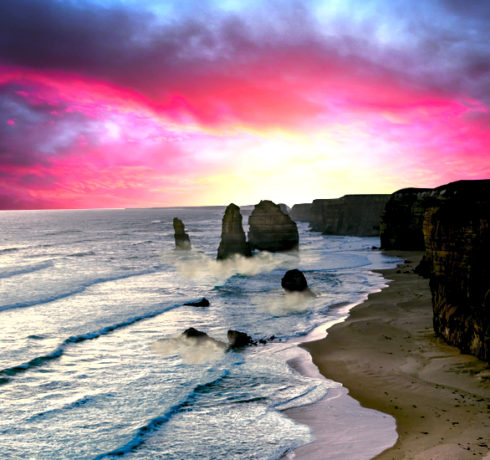

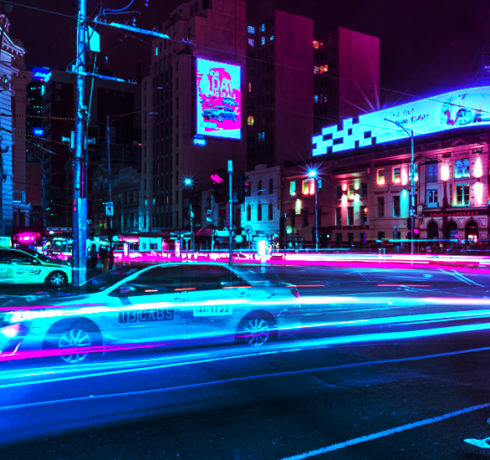
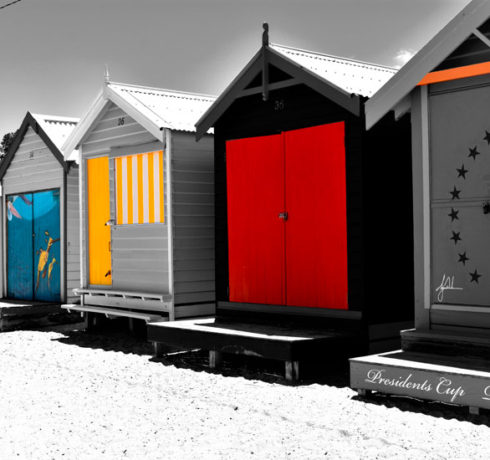
World-Class Rankings
Most Liveable City: Melbourne is ranked 4th in the world for liveability according to the Economist Intelligence Unit’s Global Liveability Index 2025. The city achieved a near-perfect score of 97 out of 100, with perfect scores (100/100) for healthcare, education, and infrastructure. Melbourne is the most liveable city in Australia.
Best Student City: Melbourne is ranked 5th in the world in the QS Best Student Cities Ranking 2025. The city ranks first globally for the Student Mix indicator, reflecting its inclusive and internationally diverse atmosphere. Melbourne is home to two of Australia’s universities ranked in the world’s top 50.
When you study in Melbourne, you will be living in a safe and vibrant city that offers world-class study options, services, and a wide range of activities and experiences.
ACCOMMODATION
Accommodation, whether in a share house or on-campus student lodgings, will almost always be the largest expense for an international student. There are several accommodation options available:
For students who are away from home for the first time, homestay provides a good way to learn about Australian lifestyle and customs while living in a family environment. Homestays typically cost AUD $300 to $400 per week and usually include meals.
Students can rent a property either alone or share with other people. Sharing accommodation significantly reduces the cost of renting. You can rent either furnished or unfurnished houses or apartments. In Melbourne, share house rent can range from AUD $200 to $400 per week depending on the location, quality, and number of housemates. Generally, accommodation further from the city centre or shared with more people will be more affordable.
Purpose-built student accommodation offers modern facilities specifically designed for students, including furnished rooms, Wi-Fi, study areas, and social spaces. Costs typically range from AUD $350 to $600 per week, with bills usually included.
- Student Housing Australia: https://sha.com.au
- Scape Accommodation: https://www.scape.com.au/melbourne/
Short-term accommodation: Hostels and hotels are suitable when students need somewhere to stay on a short-term basis while arranging their long-term accommodation.
Cost of Living
IMPORTANT: The Australian Government specifies AUD $29,710 as the minimum amount required to demonstrate financial capacity for living costs for a 12-month period (updated May 2024). This is a visa requirement and does not include tuition fees or travel costs.
| Living Cost Category | Annual Amount (AUD) |
| Primary Student | $29,710 |
| Partner or Spouse | $10,394 |
| Dependent Child | $4,449 |
For further details, please visit: https://www.studyaustralia.gov.au/en/life-in-australia/living-and-education-costs
Working While Studying
International students on a Student Visa (Subclass 500) can work up to 48 hours per fortnight during term time and unlimited hours during scheduled study breaks. The national minimum wage is AUD $24.95 per hour (as of 1 July 2025). Remember that your studies must remain your priority, and work should not impact your academic performance.
Transport
Melbourne has an excellent public transport network of trains, trams, and buses. The city has the world‘s largest tram network, and there is a Free Tram Zone within the CBD and Docklands area, making it easy and cost-free to get around the city centre.
International students may be eligible for the International Student Travel Pass (ISTP), offering a 50% discount on Myki passes. Check with your education provider about eligibility.
MELBOURNE CLIMATE
Melbourne has a temperate climate with four distinct seasons. The city is famous for experiencing “four seasons in one day”, so always be prepared for changing weather!

SUMMER
December – February
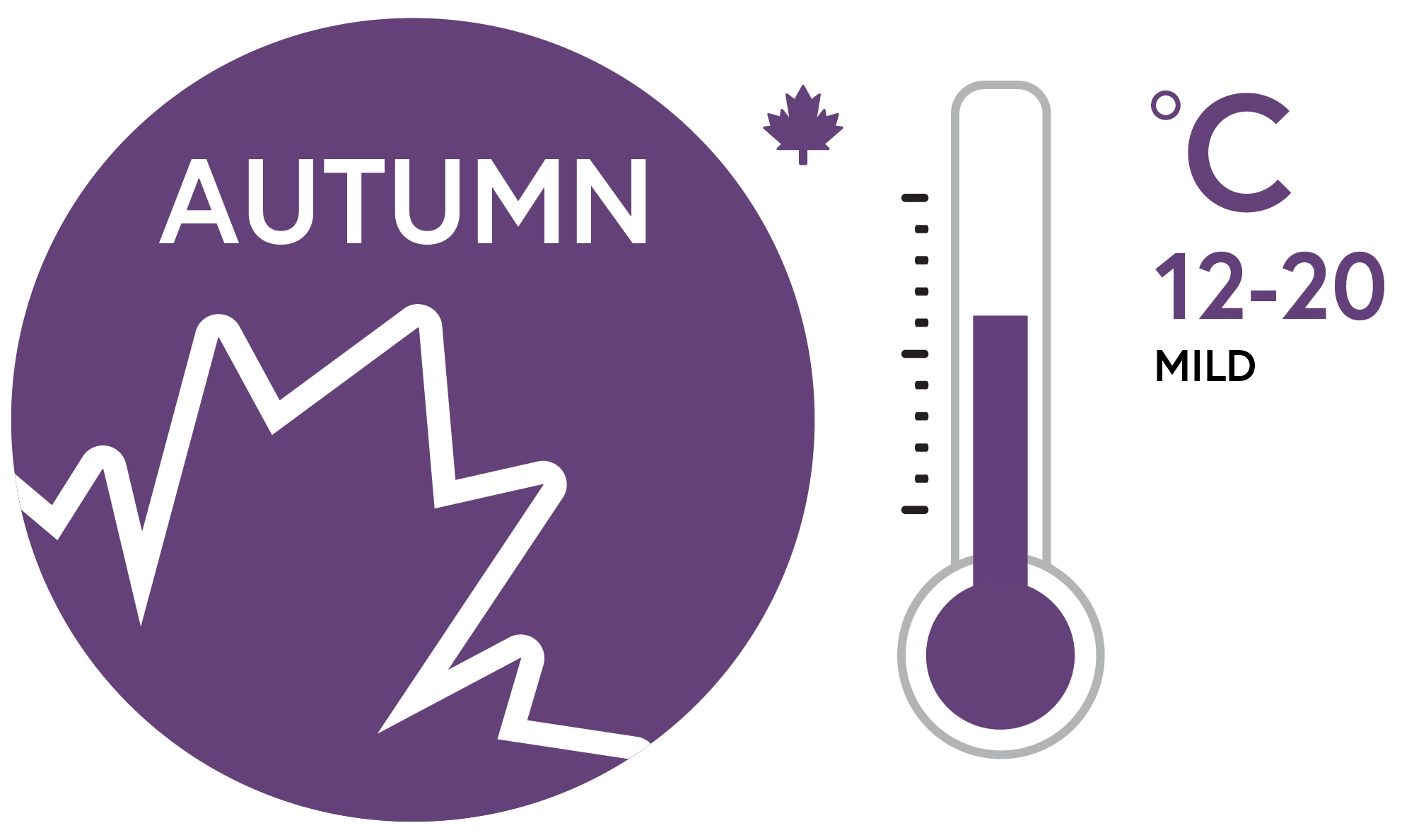
AUTUMN
March – May

WINTER
June – August
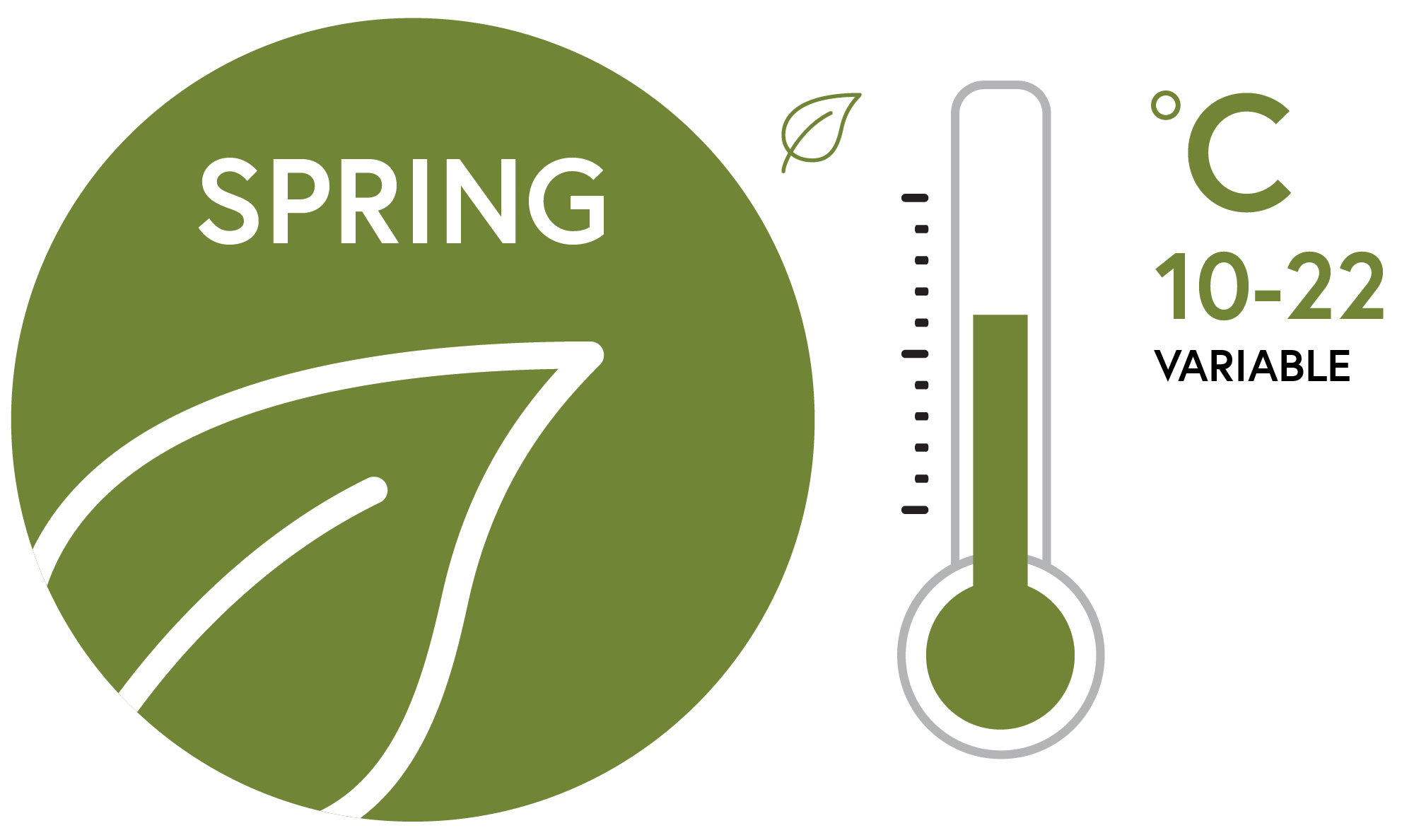
SPRING
September – November
Health Insurance (OSHC)
Overseas Student Health Cover (OSHC) is mandatory for all international students on a Student Visa. You must have valid OSHC for the entire duration of your stay in Australia. OSHC typically costs between AUD $478 and $700 per year, depending on the provider and level of coverage. Your education provider can advise you on approved OSHC providers.
Useful Tips for International Students
- Bank accounts: Open an Australian bank account upon arrival. Major banks include Commonwealth Bank, ANZ, Westpac, and NAB.
- Tax File Number (TFN): Apply for a TFN from the Australian Taxation Office if you plan to work.
- Myki card: Get your Myki public transport card early to make travelling around Melbourne easy.
- Student services: Contact your education provider’s international student support services for assistance with accommodation, wellbeing, and academic matters.
- Emergency: In an emergency, dial 000 for police, fire, or ambulance services.